
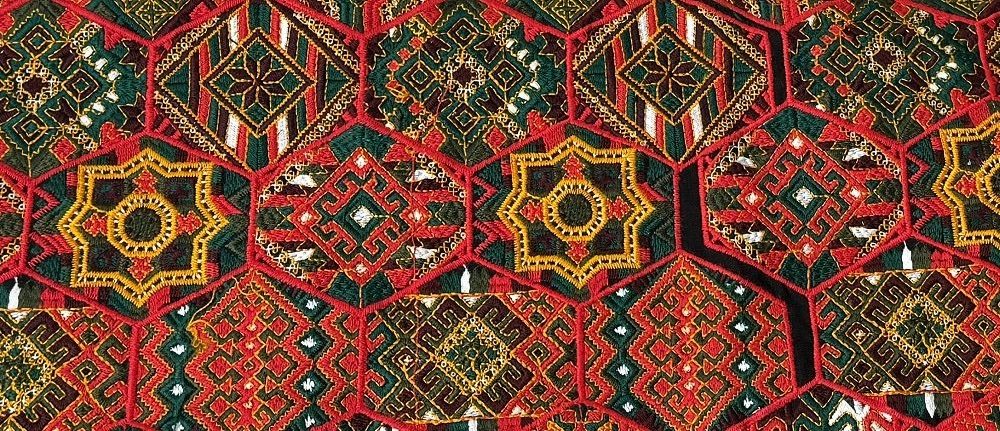
The Art of Balochi Needlework: History, Patterns, and Stitching Techniques
What is Needlework?
Needlework is a form of handicraft in which the artist uses a needle and colored threads to embroider various patterns and motifs onto fabric. Unlike many other arts that are executed with industrial tools, needlework is entirely handcrafted, and every single stitch is the result of the artist’s patience, precision, and taste. This art is practiced in different parts of Iran with various styles and names. However, Balochi needlework has earned a special place among Iranian handicrafts due to the complexity of its patterns, its color variety, and its cultural depth.
History and Origin of Balochi Needlework
Balochi needlework is an art that dates back several hundred years. Its main origin lies in the Baloch-inhabited regions of southeastern Iran, especially Sistan and Baluchestan Province and parts of Hormozgan Province. This art was traditionally practiced by Baloch women and passed down from mother to daughter. In the past, a girl’s skill in needlework was considered an important measure of her readiness for married life and even formed part of her dowry.
The patterns and motifs of this art are inspired by the surrounding nature—flowers, trees, native animals, and the cultural beliefs of the region. Each design in Balochi needlework usually has a specific name and story that has been passed down from generation to generation. This deep connection with nature and indigenous culture has transformed Balochi needlework from a merely decorative art into a narrator of the identity and history of an entire people.
Tools and Materials Used in Balochi Needlework
To embroider an authentic Balochi needlework piece, the following tools and materials are used:
- Base fabric, usually chosen from sturdy, densely woven fabrics such as canvas or cotton, so that the delicate stitches remain durable on it.
- Silk or high-quality colored threads in vibrant and diverse colors such as red, orange, yellow, green, blue, and black. The combination of these colors together creates the distinctive visual identity of Balochi needlework.
- Special needles of varying thicknesses, selected according to the fineness of the design.
- A small wooden frame or hoop, sometimes used to keep the fabric taut during stitching.
Stitching Method and Technique of Balochi Needlework
Balochi needlework is usually executed without a pre-drawn pattern on the fabric; the artist holds the design in her mind and proceeds by counting the warp and weft threads of the fabric. This method, called “counted-thread” work, requires a high level of concentration and skill, as even the smallest counting error can disrupt the symmetry of the entire design.
The stitches are categorized based on the number of threads crossed in each stitch, which will be explained further below. The higher the thread count, the finer the design and, consequently, the more time required to complete it. For this reason, some Balochi needlework pieces, especially bridal dresses, take months to finish.
Types of Balochi Needlework Patterns
Balochi needlework patterns are divided into several main categories based on their shape, thread count, and application:
Thread-Count Patterns (3-thread, 4-thread, 6-thread, 7-thread, and 10-thread)
These designs are named after the number of threads used in each stitch. Patterns with fewer threads are simpler and quicker to stitch and are mostly used for everyday clothing. Meanwhile, high-thread-count designs such as 10-thread work are extremely delicate and intricate and are typically used for formal and bridal wear.
Border Patterns
These designs are usually stitched along the edges and hems of garments, headscarves, or fabrics, serving a decorative and framing role for the main motifs. Borders are typically stitched with repeating geometric patterns, bringing visual order to the final piece.
Floral Patterns
Inspired by native flowers and plants of the region, these designs are among the most widely used and popular motifs in Balochi needlework and are frequently seen on women’s clothing and decorative items.
Eye Patterns
Patterns featuring an eye motif, which in Baloch culture hold symbolic and sometimes protective meanings (to ward off the evil eye). They are usually stitched on central sections or collars of garments.
Some of the most famous Balochi needlework patterns include Gol-e Sorkh (Red Flower), Gol-e Gandomi (Wheat Flower), Gol-e Chahardang (Four-Petal Flower), Cheshm-e Gorbe’i (Cat’s Eye), Cheshm-e Mahi (Fish Eye), Sar-e Tavousi (Peacock Head), Gowhar-kesh, and Bann. Each of these patterns has roots in the culture and nature of Balochistan and represents a heritage passed from mother to daughter. For instance, the “Peacock Head” design is inspired by the peacock’s colorful feathers and requires a high level of mastery in color combination, while the “Fish Eye” pattern, with its simpler yet striking design, is mostly used in border embroidery.
Colors in Balochi Needlework and Their Meanings
Color in Balochi needlework is not merely aesthetic but also carries cultural and symbolic significance. Red, the most frequently used color in this art, is considered a symbol of joy, love, and life. Green evokes nature and greenery, which holds special value in the arid climate of Balochistan. Yellow and orange are often used to add brightness and warmth to the composition of designs. The harmonious combination of these colors against dark fabric backgrounds is one of the key factors distinguishing authentic Balochi needlework from imitations.
Products and Applications of Balochi Needlework
Today, Balochi needlework is no longer limited to traditional garments. Artisans apply this art to the production of various handicrafts and functional products. Bedspreads, prayer rugs, curtains, tablecloths, bags, shoes, ties, and modern clothing are among the items produced using the authentic art of Balochi needlework. To see genuine examples and purchase handmade products, you can visit the [Persian Dookht Rashin needlework products page].
This expansion of applications has turned Balochi needlework from a local traditional art into a product of economic and cultural value in domestic and even export markets. In recent years, fashion and clothing designers have also combined this traditional art with modern patterns, creating products that appeal to both the domestic market and foreign enthusiasts of Iranian handicrafts. This trend has not only helped preserve the art but has also provided a sustainable source of income for Baloch women artisans.
Economic and Cultural Significance of Balochi Needlework
In recent years, Balochi needlework has been recognized as one of the most important sources of employment for women in Baloch-inhabited areas. Many cooperatives and home-based workshops in Sistan and Baluchestan rely on this art to produce goods that have not only found a domestic market but have also been featured in international handicraft exhibitions. This art is also recognized as part of Iran’s intangible cultural heritage, and efforts are underway for its national registration and to support practitioners of this craft (for more information, you can visit the website of the Cultural Heritage, Handicrafts and Tourism Organization).
How to Distinguish Authentic Hand-Embroidered Balochi Needlework from Machine-Made Imitations
With the growing demand for needlework products, machine-made and printed imitations have also entered the market, differing greatly in price and quality from authentic hand-embroidered pieces. To identify genuine hand embroidery, you can look at the back of the fabric; in hand embroidery, the reverse side also shows a certain order and precision, whereas machine-made samples typically have a messy reverse side or a uniform printed appearance. Also, the presence of the slightest natural irregularities in stitch spacing indicates the piece is hand-stitched, since the human hand—unlike a machine—does not produce perfect uniformity.
Care and Maintenance of Needlework Garments and Products
To preserve the beauty and durability of needlework designs, observing a few essential points is necessary. These products are best washed by hand in cool or lukewarm water, and the use of washing machines and dryers should be avoided, as heat and mechanical agitation can damage the delicate threads. It is also recommended not to use strong detergents or bleach, so that the thread colors do not fade. Storing the items in a dry place, away from direct sunlight and moisture, also helps maintain the quality and brilliance of the colors over the long term. If ironing is needed, it is better to iron the fabric from the reverse side with low heat to avoid damaging the surface stitches.
Frequently Asked Questions about Balochi Needlework
How long does Balochi needlework take?
Depending on the complexity of the design and the thread count, embroidering a complete garment can take anywhere from a few weeks to several months. Some bridal dresses with 10-thread patterns may even take up to a year.
What are the most authentic Balochi needlework designs?
Gol-e Sorkh (Red Flower), Cheshm-e Gorbe’i (Cat’s Eye), Sar-e Tavousi (Peacock Head), and Gowhar-kesh are among the most recognized and popular traditional patterns.
Is Balochi needlework only used for clothing?
No, today this art is also used in the production of bags, shoes, bedspreads, prayer rugs, curtains, tablecloths, and various handicrafts.
What is the difference between hand-embroidered and machine-made needlework?
Hand-embroidered pieces display natural, non-uniform order on the reverse side and in stitch spacing, and they generally use higher-quality thread and fabric. Machine-made samples, in contrast, are more uniform but lack the authentic artistic and cultural value.
Why is the color red so widely used in Balochi needlework?
In Baloch culture, red is a symbol of joy, love, and life, which is why it is the most common background or motif color in this art.
Conclusion
Balochi needlework reflects the identity, creativity, and patience of the women artists of Balochistan. With centuries-old roots, a rich variety of symbolic patterns, and vibrant, meaningful colors, this art has found a special place not only in traditional clothing but also in modern products. Today, this authentic art, beyond its cultural value, has become a source of job creation and a means of introducing Iranian identity to the world, and it continues to be regarded as one of the treasuries of Iran’s handicrafts.
اگر بازخورد یا درخواست دیگری دارید، خوشحال میشوم کمک کنم.